
About RabatArt · Rabat, Morocco
The keepers of Moroccan architectural craftsmanship
RabatArt is a collective of Morocco’s finest Maâlems — master craftsmen who have each spent a lifetime inside a single discipline — brought together so that a mosque, an embassy or a private villa can be built by one trusted partner instead of twelve separate workshops.

Our Story
A heritage never meant to survive in fragments
For six centuries the techniques of traditional Moroccan architecture travelled the only way they could: from the hands of one man into the hands of a younger one, in a workshop, over years, without a written page between them.
That transmission was never the fragile part. The market was. A zellige maâlem worked one street; a gypsum carver another; the cedar workshop was in a different city altogether. An architect who wanted a single room done properly had to find them all, persuade them all, and hold seven timelines in his head — and any one of them could undo the room.
Master Artisan Abdelaly Ouedrhiri watched that arithmetic play out for four decades. He also watched something quieter: gifted young men leaving the trade because the work arrived in fragments, and fragments do not feed a family.
A craft survives in the hand, not in the archive.
RabatArt was founded to answer both problems at once. One name, one standard, one accountable partner — and behind that name, more than a hundred artisans who can afford to spend their lives inside a single craft because the work no longer arrives by accident.
We did not create these crafts, and we are careful never to speak as though we did. What we do is keep them at work — which, for a living tradition, is the only form of preservation that counts.
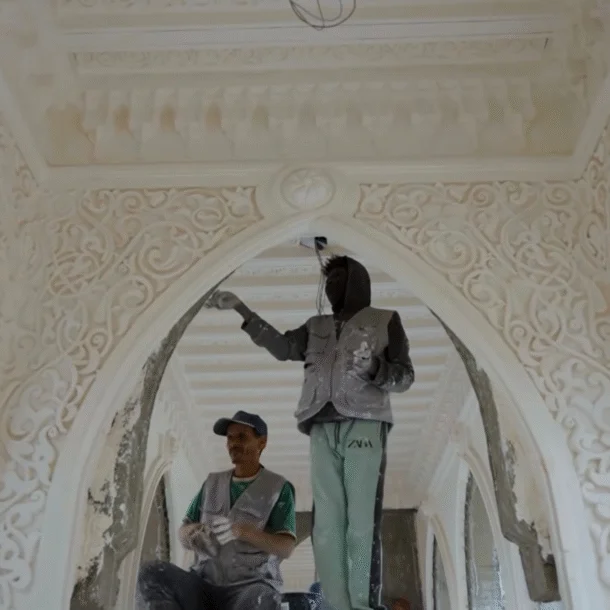
A master is not the one who knows the most. He is the one the others agree to answer to.
The Heart of RabatArt
Abdelaly Ouedrhiri
Master Artisan — four decades in Morocco’s traditional crafts
Ask him what he does and he will tell you he is an artisan. Forty years in, that is still the answer — and it remains the most honest description of a career that has shaped mosques, embassies, hotels and private residences across Morocco and beyond.
He learned the trades, then led them, then defended them. As President of the Chamber of Traditional Crafts he argued for the artisans in the rooms where their future was being decided, and went back afterwards to the workshop, because that is where the argument is actually won.
What he passes on is rarely a technique. Techniques can be shown in an afternoon. What takes years is judgement: knowing when clay is ready, when a cut is honest, when a ceiling should be quieter than the drawing suggests. That can only be handed over in person, slowly, to someone willing to stay.
Today more than a hundred artisans work within the collective, each discipline led by its own Maâlem. Master Abdelaly’s role is the one he has held all along: he sets the standard, and he stands behind the work when it leaves the workshop.
- 40+ years inside the craft
- Former President, Chamber of Traditional Crafts
- 100+ artisans in the collective
- Mosques · Embassies · Villas · Hotels · Restoration

His father built the legacy. Mohammed is building the bridge.
The Next Generation
A bridge between generations
RabatArt was founded by Mohammed Ouedrhiri, son of Master Artisan Abdelaly Ouedrhiri.
After more than twelve years with Emirates Airlines, Mohammed returned to Morocco and to the world he had grown up around — workshops, Maâlems, architecture and the projects he had experienced alongside his father.
Today, he works alongside Abdelaly to connect generations: bringing the knowledge of Morocco’s master artisans to architects, designers and clients around the world, while carrying that knowledge forward through a new generation.
The Collective
Every craft answers to its own Maâlem
A Maâlem is a master recognised inside Morocco’s own artisan hierarchy — not a job title a workshop can award itself.
RabatArt is not a company with departments. It is a guild, assembled deliberately, one discipline at a time.
Each craft is led by a Maâlem who has spent a working life in one material and would not claim authority in another. The zellige master does not carve cedar. The gypsum carver does not fire tile. That refusal is precisely why the work holds.
Around each of them stands a bench of artisans — apprentices, journeymen, and masters in waiting — more than a hundred in all. Some have worked beside the same Maâlem for twenty years. They are named in the workshop rather than on a website, but their hands are on every project we deliver.
What the collective adds is coordination: one project manager, one production schedule, one delivery date, one installation team. The craft stays where it belongs. The complexity moves to us.
Moroccan Zellige
Led by the zellige Maâlem · cutting & setting
Hand-Carved Gypsum
Led by the gebs Maâlem · wet carving
Cedar Wood Carving
Led by the cedar Maâlem · ceilings & joinery
Mashrabiya
Led by the turning Maâlem · lattice screens
Tadelakt & Lime
Led by the lime Maâlem · polished surfaces
Decorative Metalwork
Led by the metal Maâlem · brass, bronze, iron
Heritage Restoration
Led by senior masters across all trades
One line, seven disciplines, a single standard running through all of them.
Our Philosophy
Why craftsmanship still matters
Handmade is not a style. It is a tolerance.
A machine repeats; a hand responds. Zellige cut by hand carries an edge that catches light differently every few centimetres, so the surface stays alive because it is imprecise in a disciplined way. That is not a defect waiting to be engineered out. It is the material speaking, and it is the whole reason the room feels the way it does.
Heritage is a practice, not an inventory.
A building can be listed, surveyed and photographed and still lose its craft, because the craft was never in the building. It lives in a technique someone is being paid to perform while someone younger watches. Preserve the drawing and you keep a record. Preserve the workshop and you keep the thing itself.
Patience is a material like any other.
Lime cures at its own speed. Gypsum sets while the carver is still cutting. A cedar ceiling takes the months it takes. We can compress logistics, drawings and decisions — and we do — but we do not compress the part of the process that is the work itself.
The best work outlives the argument about its cost.
Handmade architecture is not an expense with a return; it is a decision with a lifespan. In fifty years nobody will recall the schedule or the line item. They will stand in the room, look up, and understand immediately whether it was made by someone who cared.
Our Expertise
The traditional crafts we preserve
Not a service list. These are the disciplines held inside the collective, each with its own masters, its own rules and its own reason to exist.
Fez clay, glazed, fired, then cut by hand with a sharpened hammer against the knee — each piece shaped for one place in one pattern and nowhere else. A Maâlem cutting zellige does not measure; the geometry is in his hands. It is why a hand-cut panel reads as one continuous surface and a machine-cut one reads as a floor.
Carved wet, in place, against the clock. The plaster sets as the carver works, so the design is drawn once and cut once. There is no undoing a line in gebs, which is why these are among the most senior hands in the house.
Middle Atlas cedar, worked while it still carries the smell of the mountain. Ceilings, doors, corbels and painted coffers, assembled so the wood can move for two hundred years without splitting.
Thousands of turned wooden pieces latticed by hand into a screen that gives shade, privacy and moving air at once. The oldest climate technology in the Moroccan house, and still the most beautiful answer to a hot afternoon.
Lime, polished with river stone and sealed with black soap until it turns waterproof without a single seam. A wall you can run water down, made of nothing but lime, pressure and time.
Brass, bronze and iron: pierced lanterns, chiselled door plates, railings and hardware cut to follow the geometry of the room they serve rather than a catalogue.
Our Specializations
Where the crafts come together
Mosques & Islamic Architecture
Mihrab, minbar, minaret and ablution courts, executed to religious convention and municipal tolerance at the same time — frequently on a calendar that belongs to the community rather than to us.
Heritage Restoration
Restoration is not replication. We work from the original craft logic — the same clay body, the same cut, the same jointing — so that a repaired panel weathers at the same rate as the centuries-old one beside it.
Luxury Residential
Riads, villas and private residences, where the craft package is scoped room by room and the detail is agreed before anything is cut.
Hotels & Hospitality
Hotels, resorts and public interiors, where the craft has to meet a programme, a site and a main contractor without losing what makes it handmade.
Legacy
Every project continues Morocco’s architectural story
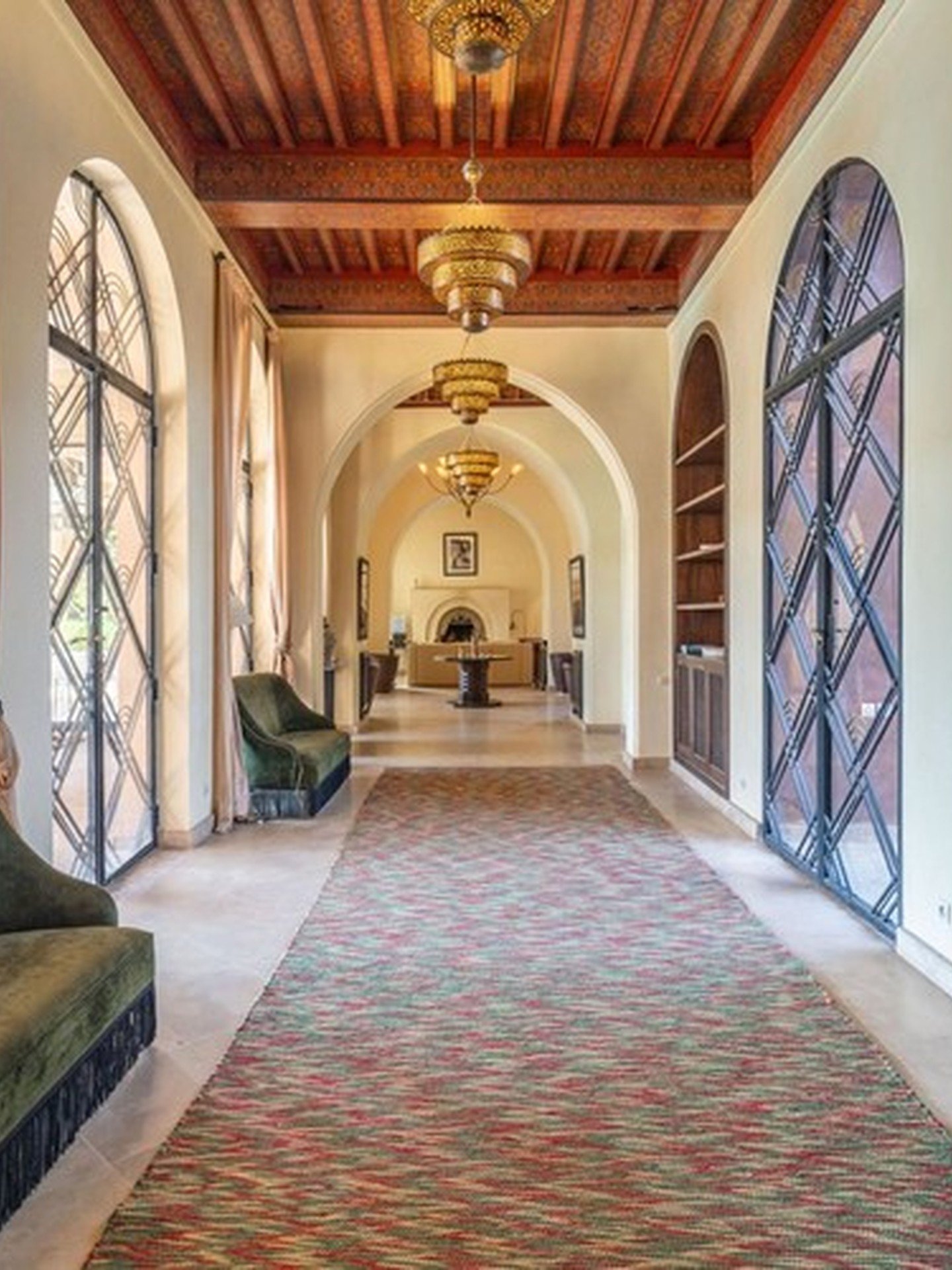
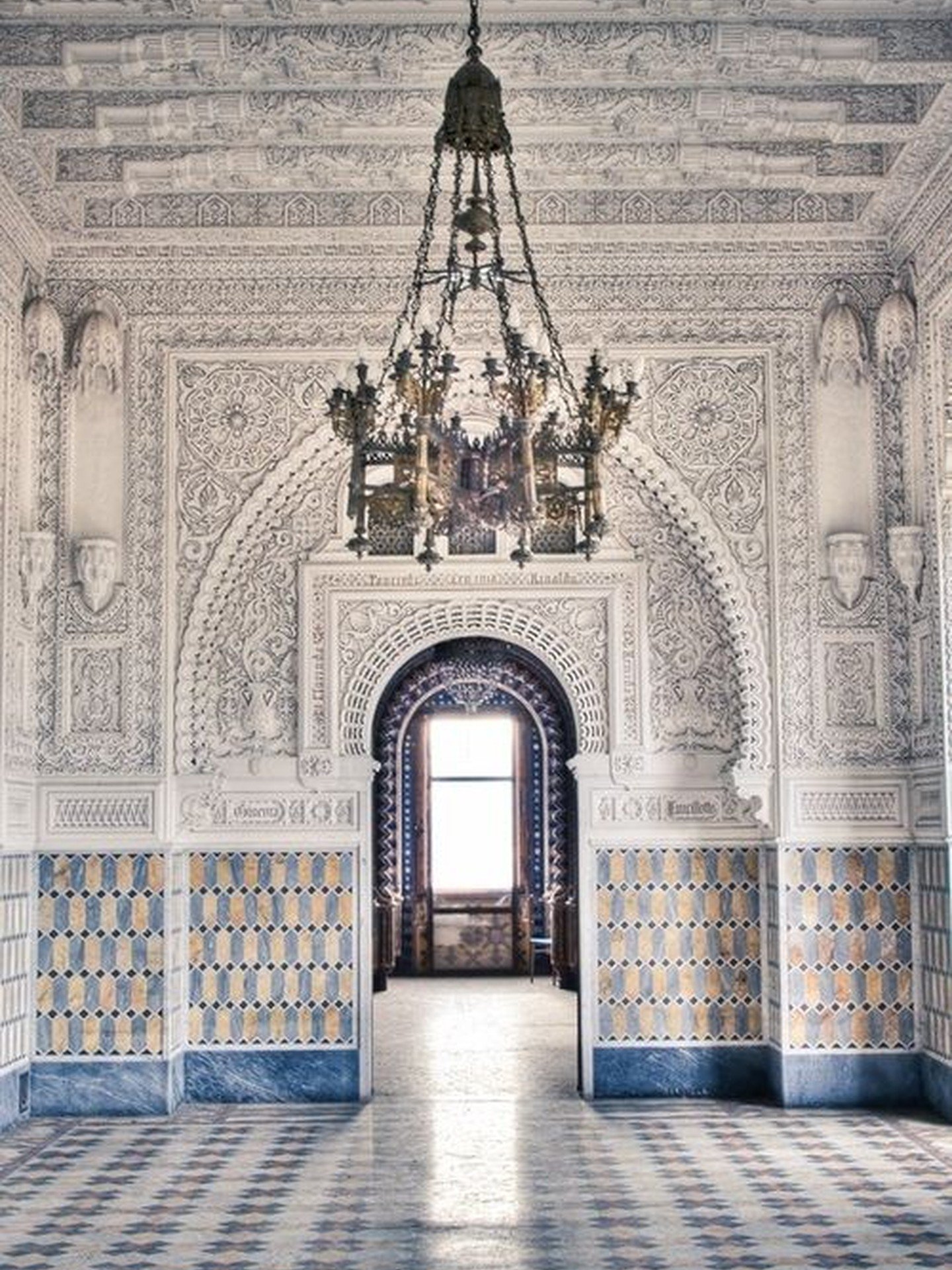
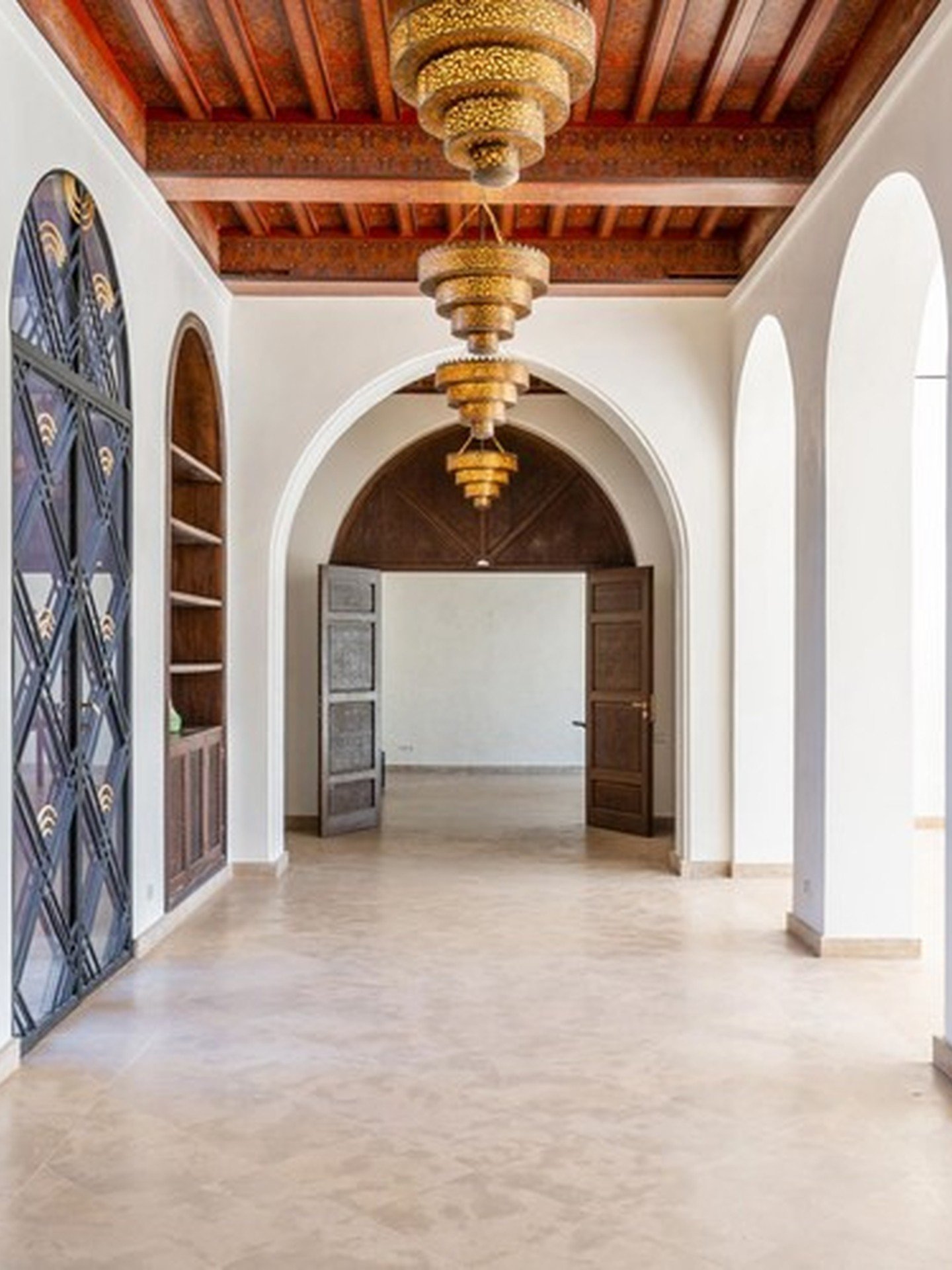
A mosque in Rabat, an embassy dining room, a riad returned to its own century. The same tradition, still being added to.
Our Values
Principles we do not trade away
01
Respect for Heritage
We work inside a tradition we did not invent, and we do not improve it for the sake of leaving a signature on it.
02
Mastery Through Experience
Authority here is earned in decades, at a bench, under someone stricter than you. It is never awarded by a job title.
03
Patience Creates Perfection
The work takes the time the material asks for. We would rather move a date honestly than lower a standard quietly.
04
Craft Before Convenience
Where the faster method and the right method part company, we take the right one and absorb the difference ourselves.
05
Collaboration Without Compromise
We commit to your vision and stay honest about what the material will do. You hear both, before anything is fired.
06
Every Detail Matters
The joint nobody will photograph is finished to the same standard as the one everybody will.
If you are building something that deserves this, let’s begin a conversation.
Send the drawings, the site, or simply the idea. Master Abdelaly and the studio will tell you honestly what the craft can do, what it cannot, and what it will ask of you along the way.
Next — The Work