
Architectural Craftsmanship · Rabat, Morocco
Four disciplines. One atelier. Every surface answered.
Zellige, carved gypsum, cedar, tadelakt, metalwork and heritage restoration — delivered as one specification, one schedule, one accountable partner.
One Partner
The coalition you no longer have to assemble
Specifying traditional Moroccan architectural craftsmanship usually means assembling a coalition: one workshop for zellige, another for hand-carved gypsum, a third for cedar, then tadelakt, then metalwork, then restoration. Six contracts. Six schedules. Six standards of finish, and every seam between them left to the architect to manage.
RabatArt was built to end that. From our Rabat atelier, Morocco’s finest Maâlems coordinate the full range of traditional architectural craft — coordinated by one project manager, produced to one drawing set, delivered on one date, installed by one team.
You specify the intent. We hold the whole of it.
What We Deliver
Four disciplines of Moroccan architectural craftsmanship
01
Architectural Surfaces
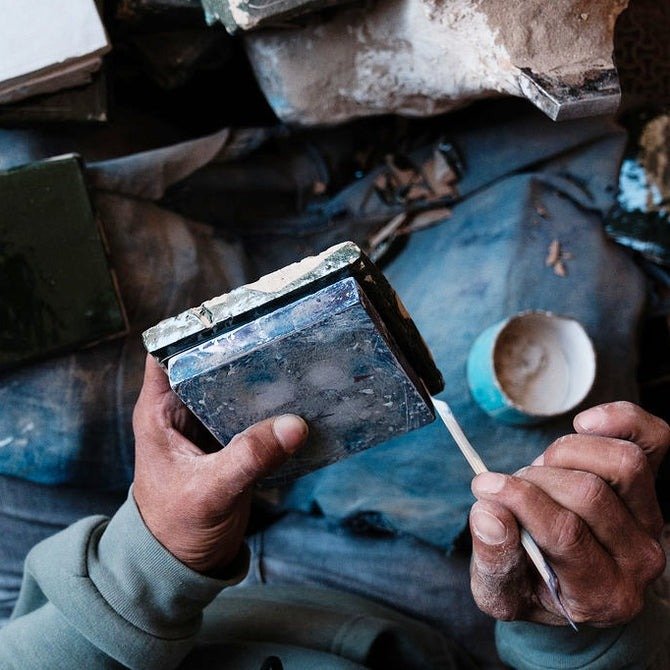
The plane a building presents to the light. Hand-cut zellige set tile by tile from fired Fez clay; tadelakt burnished with river stone until stone becomes silk; lime and tahejart finishes that let a wall breathe for a century. Surfaces are where Moroccan architecture is recognised before it is understood.
Within this discipline
Materials
Fired Fez clay · natural pigment · slaked lime · black soap · marble dust
Applications
Facades · courtyards · hammams · fountains · lobbies · wet rooms
02
Decorative Arts
Ornament carved rather than applied. Wet gypsum incised by hand in the hours before it sets. Middle Atlas cedar cut into muqarnas and coffered ceilings. Mashrabiya turned so that light arrives filtered and air arrives cooled. Brass and copper chased by hammer. Nothing here is cast, moulded, or repeated by machine.
Within this discipline
Materials
Gypsum plaster · Middle Atlas cedar · brass · copper · hand-forged iron
Applications
Ceilings · cornices · screens · doors · balustrades · mihrabs


03
Heritage & Restoration
Restoration is not replication. Recovering a historic riad, a mosque interior, or a listed monument means re-entering the original craft logic — the same clay body, the same pigment, the same hand sequence — so that the repair is indistinguishable from what it repairs. Our restoration Maâlems work from technique, not from photographs.
Within this discipline
Methods
Original clay bodies · period pigments · lime mortars · reversible intervention
Applications
Listed buildings · medina riads · madrasas · historic mosque interiors
Proof of Scale
Signature commissions
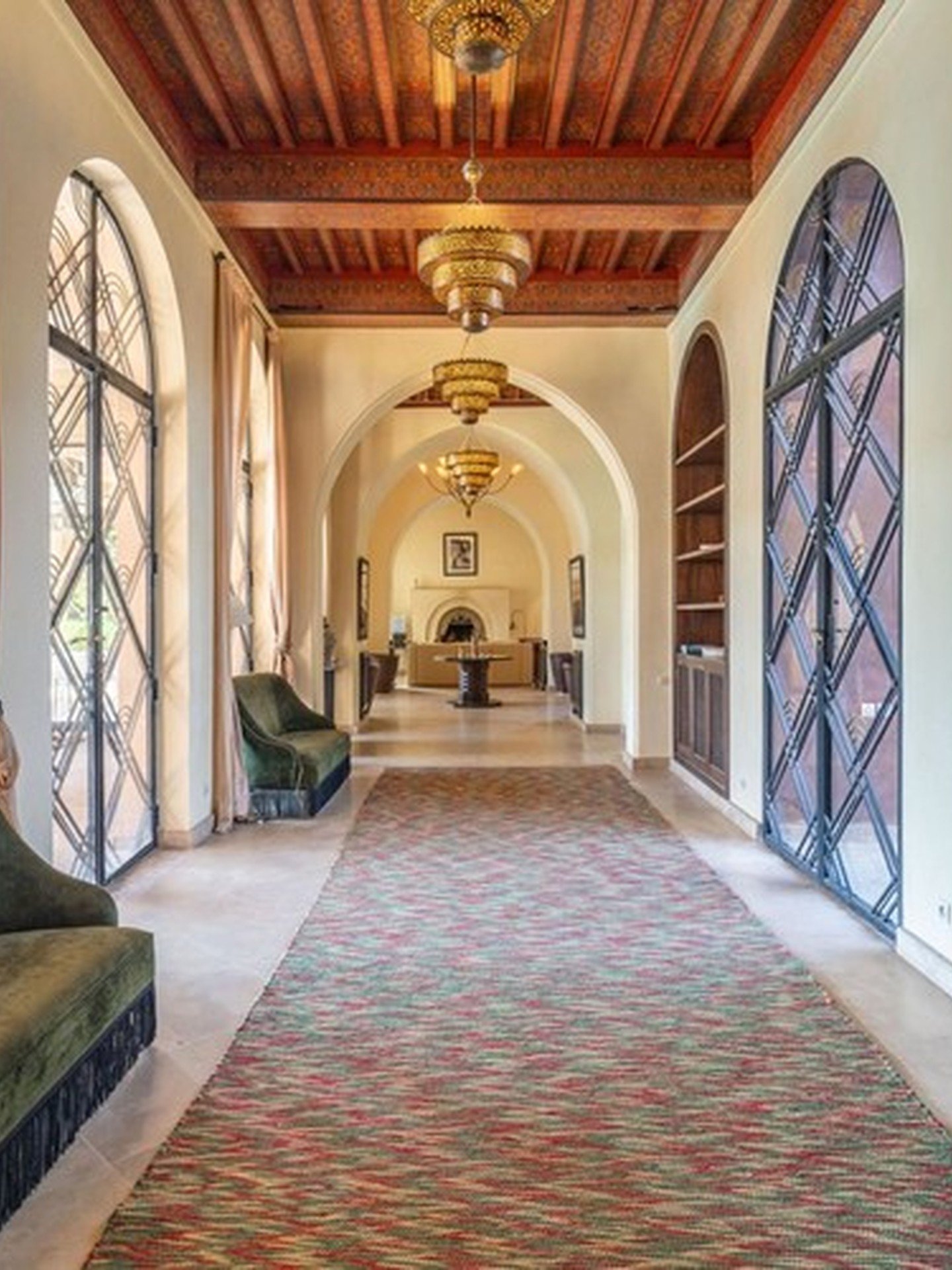
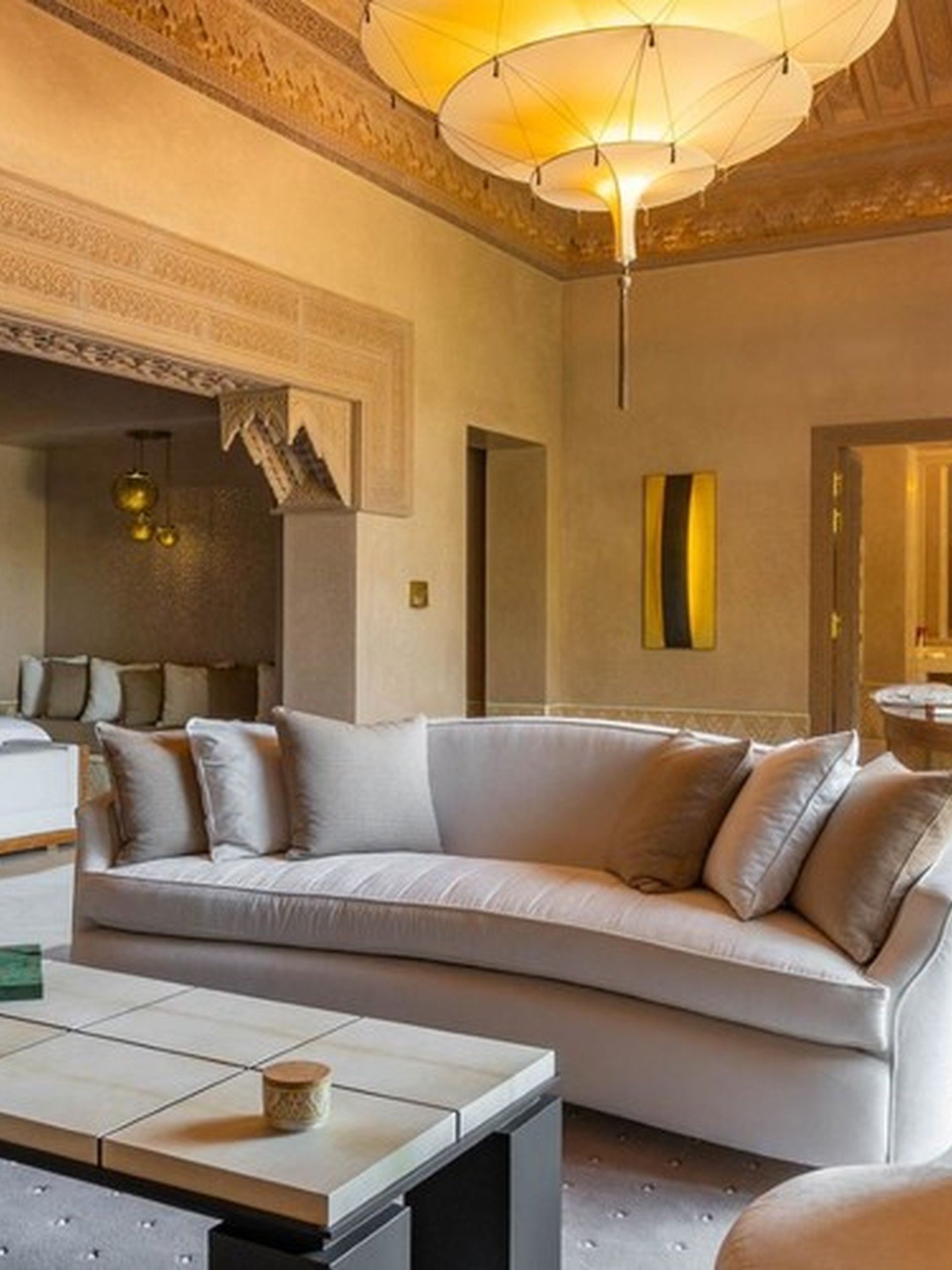
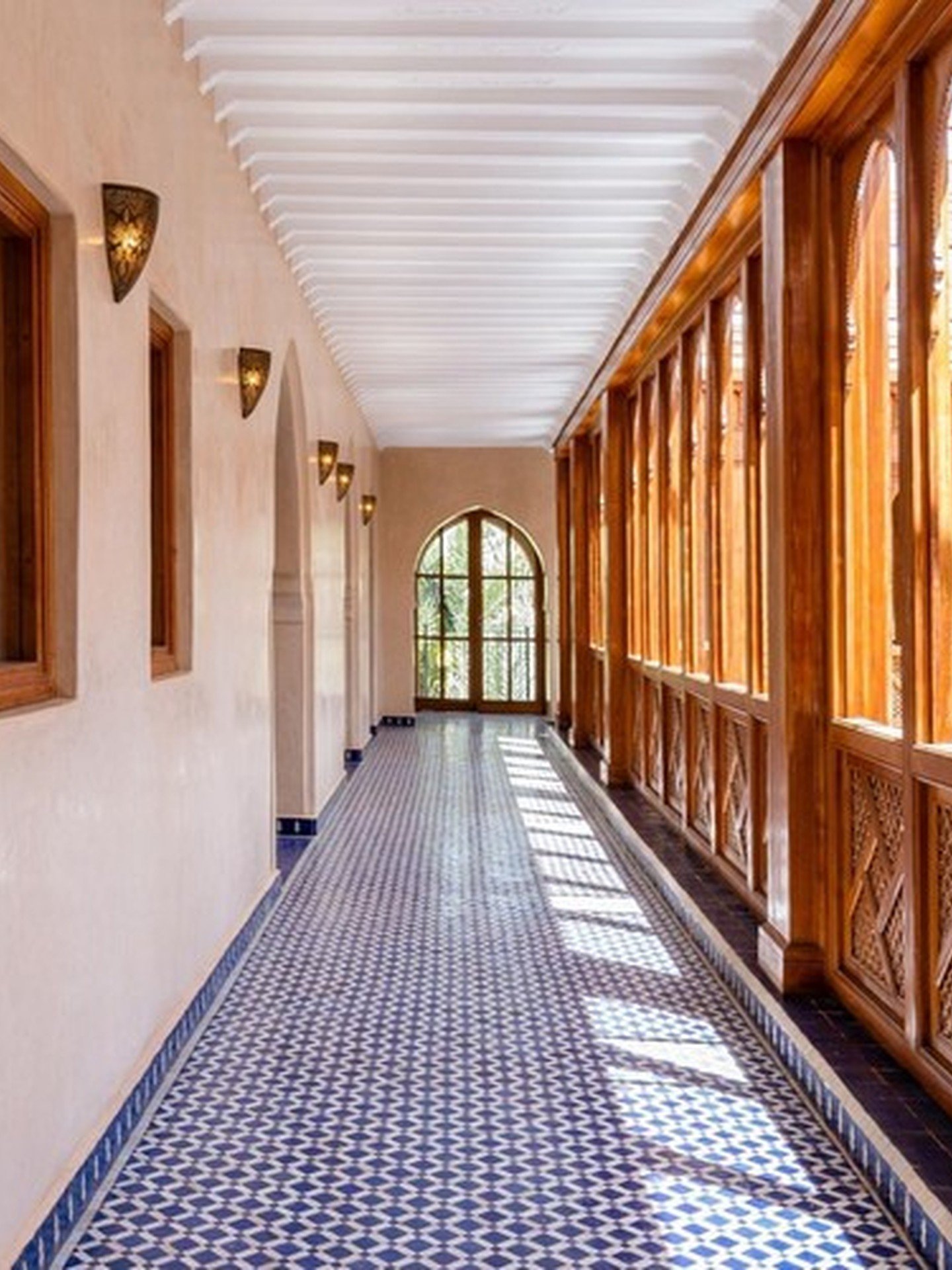
Mosques, palaces, embassies, five-star hospitality, and private residences across Morocco, the Gulf, Europe, and beyond. Commissions where there is no second attempt, no acceptable variance, and no room to discover a limitation on site.
Mosques
Sacred interiors
Luxury Villas
Private residences
Hotels & Hospitality
Five-star
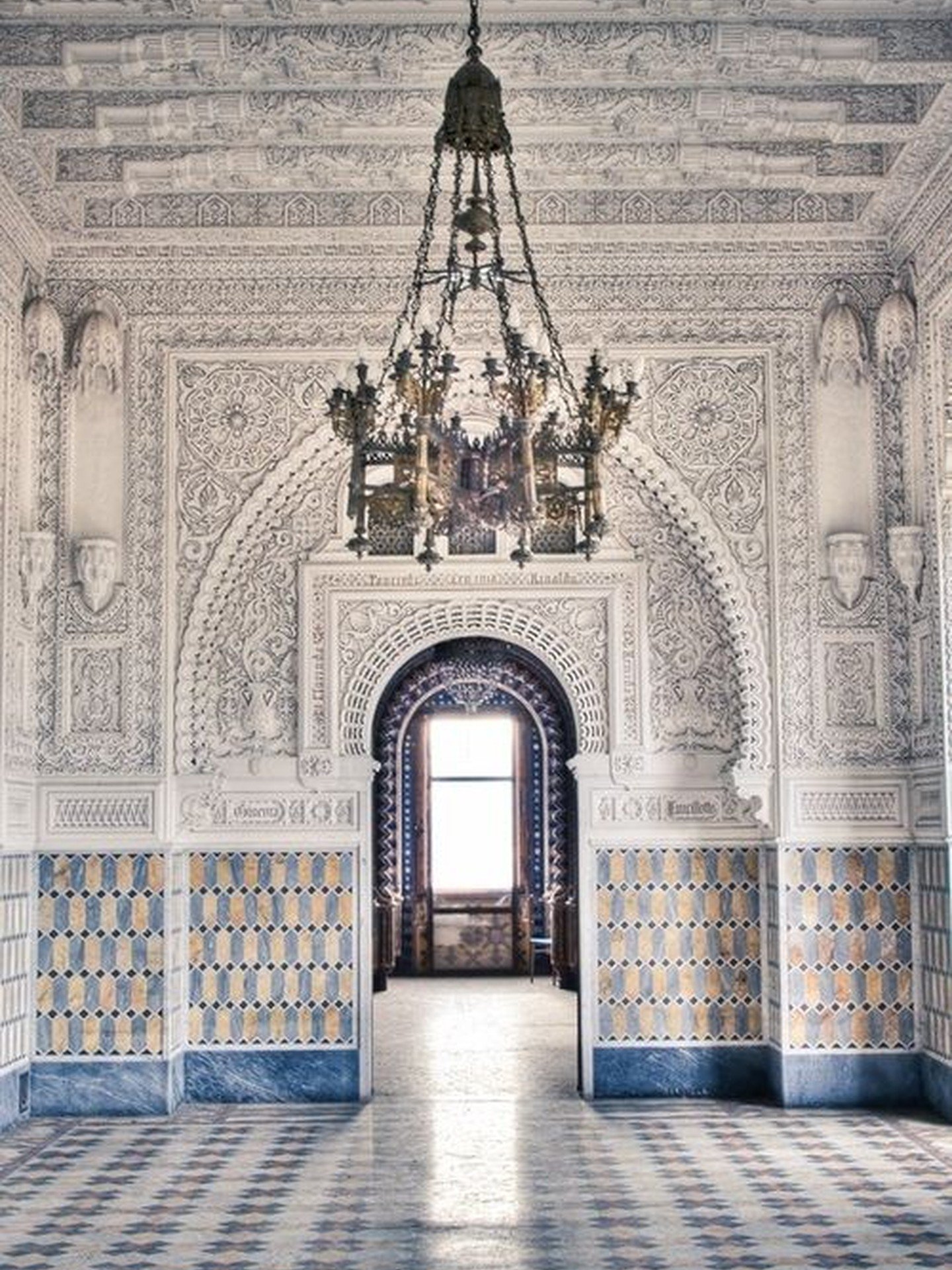
Embassies & Government
Diplomatic
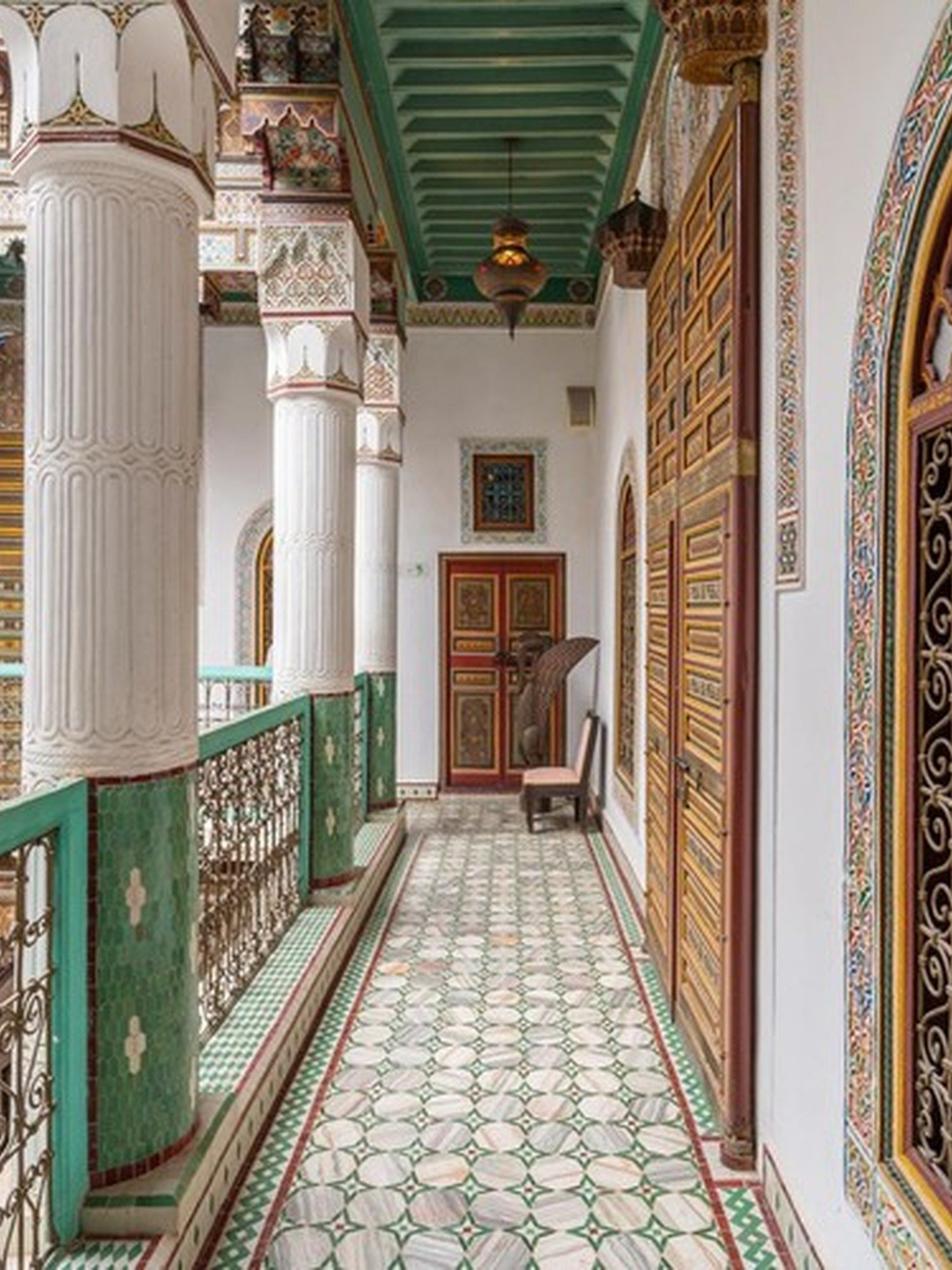
Palaces
Royal commissions
The RabatArt Difference
Why architects work with RabatArt
01
One trusted partner
Every craft coordinated by one project manager, one production schedule, one delivery date, one installation team — from first sketch to final tile set in place.
Why it matters
Six contracts and six timelines become a single accountable process.
02
Morocco’s finest Maâlems
Every piece is shaped by a master recognised within Morocco’s own artisan hierarchy — not by an assistant working from a master’s sketch.
Why it matters
Guarantees the hand-executed precision a signature architectural moment demands.
03
Direct Craft, Coordinated Partnerships
Zellige, woodwork, gypsum, tadelakt and lime finishes shaped in our Rabat atelier; metalwork, marble and tahejart delivered through trusted specialist partners — all held to one standard of finish.
Why it matters
Removes the seam risk where two workshops meet on one wall.
04
Built for architects
Shop drawings, dimensioned setting-out, prototype samples, submittal packages and site coordination — in your workflow and your units.
Why it matters
Craftsmanship that arrives documented, not improvised.
05
Heritage restored, not replicated
Historic work is recovered through the original craft logic — same clay body, same pigment, same hand sequence.
Why it matters
Protects the authenticity and heritage value you are accountable for preserving.
06
Custom fabrication, without exception
No catalogue. Every pattern, module, dimension and colourway is developed for the specific project.
Why it matters
Your design is executed as drawn, not adapted to fit a stock range.
From Brief to Handover
Our craftsmanship process
Six governed stages that turn Moroccan zellige, hand-carved gypsum and cedar woodwork into architecture built to last generations — each one ending in something that lands on your desk.
01
Consultation
We listen to the site, the architectural brief, and the constraints of the build before proposing which crafts belong in it.
→ Scope & budget framework
02
Design Review
Your drawings are translated into craft terms — module, pattern repeat, setting-out, tolerance — and returned as our drawings.
→ Dimensioned shop drawings
03
Material Selection
Clay body, pigment, cedar grade, lime and metal are chosen and tested against the light conditions of your site.
→ Material dossier & samples
04
Handcrafted Production
Shaped in our Rabat atelier by Maâlems, piece by piece, with scheduled progress documentation throughout.
→ Photographic production log
05
Quality Inspection
Every batch is inspected against the approved prototype before it is packed. Nothing leaves the atelier on assumption.
→ Signed inspection record
06
Installation
Crated, insured and freighted with full customs documentation — then set in place by the people who made it.
→ Handover & care schedule
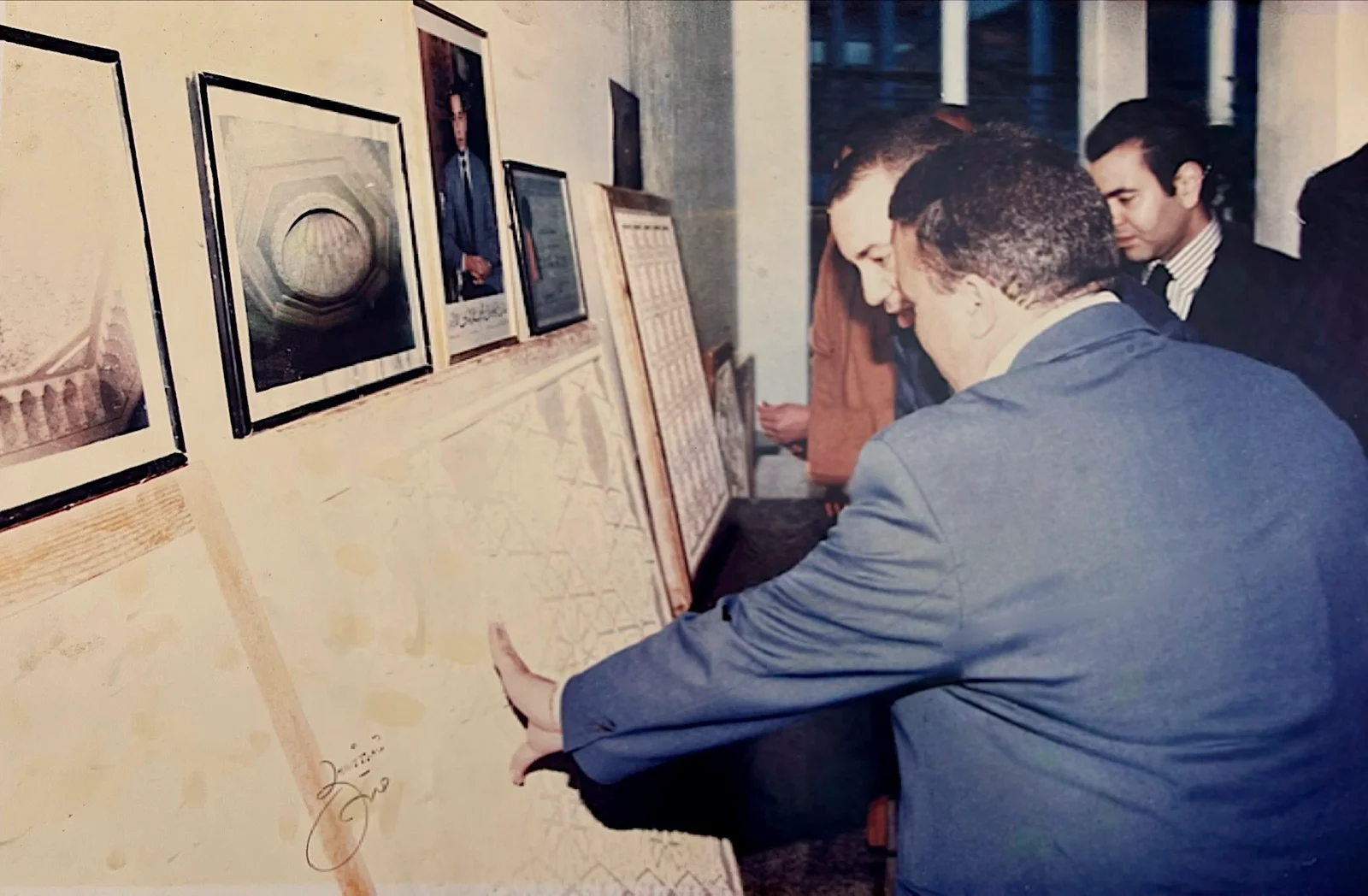
Selected Commissions
Every discipline, redeemed on site
Hassan Quarter Mosque
Mosque · Rabat, Morocco
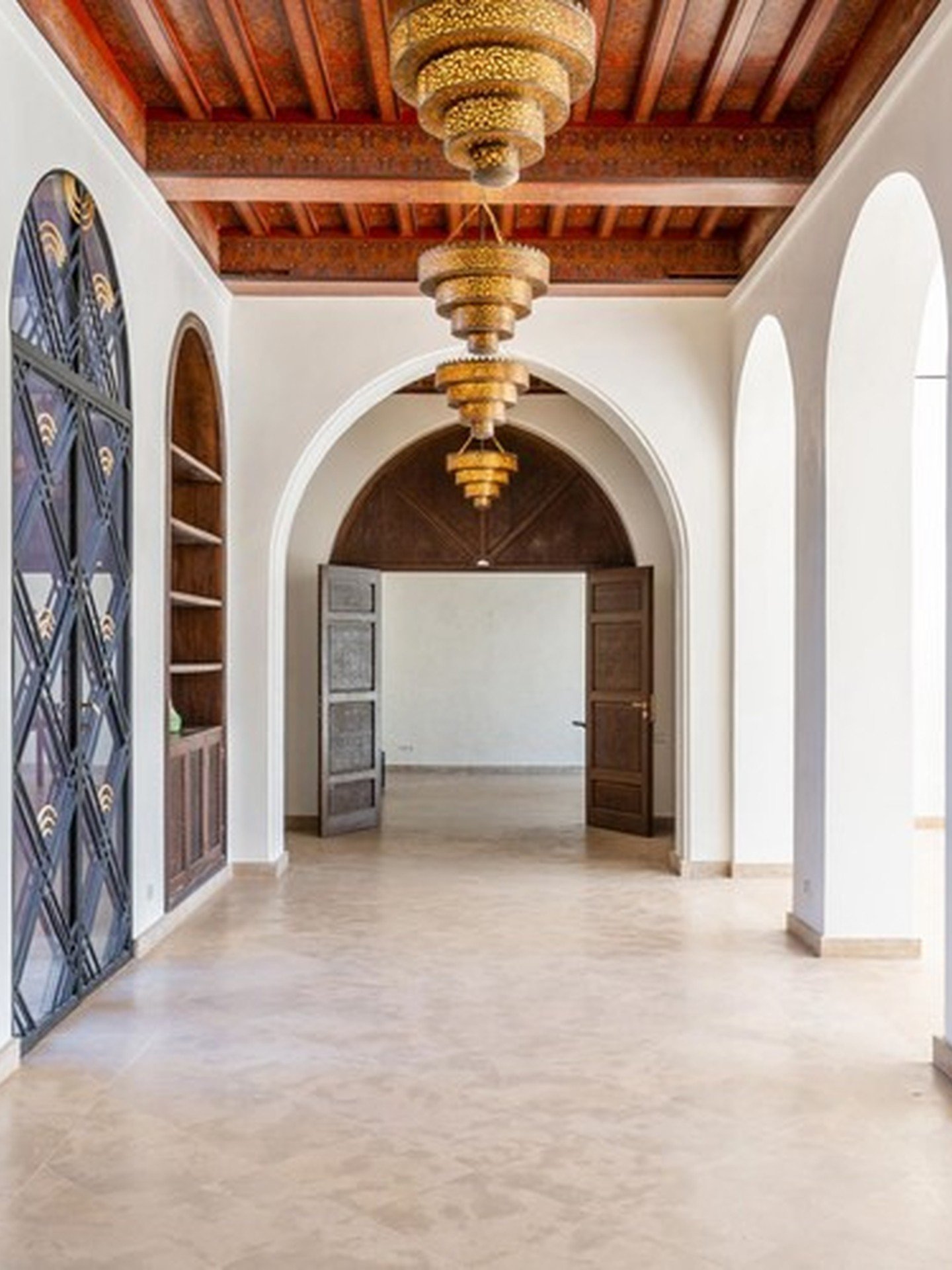
Dar El Mizan
Riad Restoration · Marrakech
Moroccan Embassy Reception
Embassy · Madrid, Spain
Villa Anfa
Private Villa · Casablanca
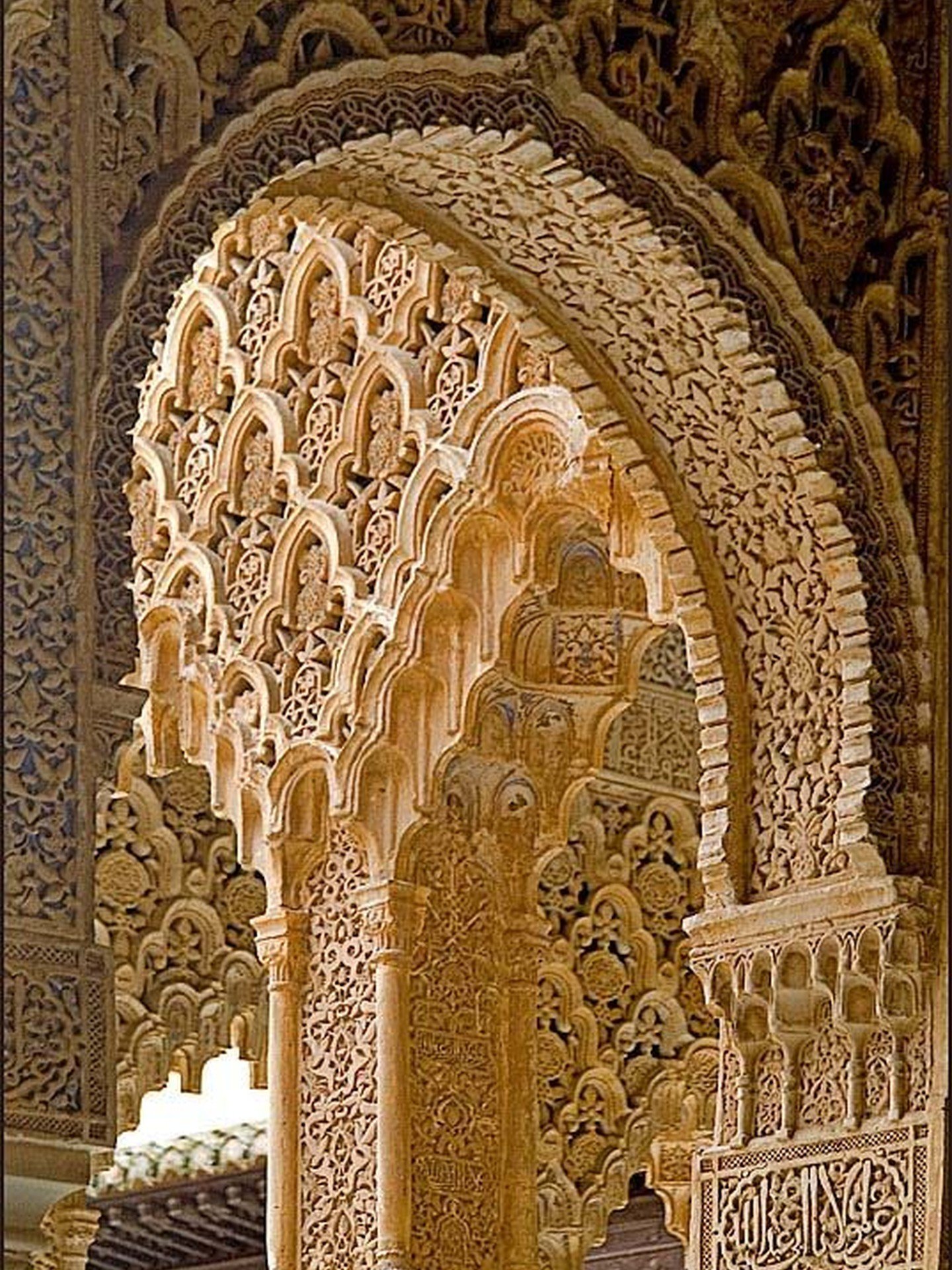
Madrasa Panel Recovery
Islamic Monument · Marrakech
Resort Suite Interiors
Five-Star Hotel · Marrakech
Courtyard & Majlis
Private Residence · Manama, Bahrain
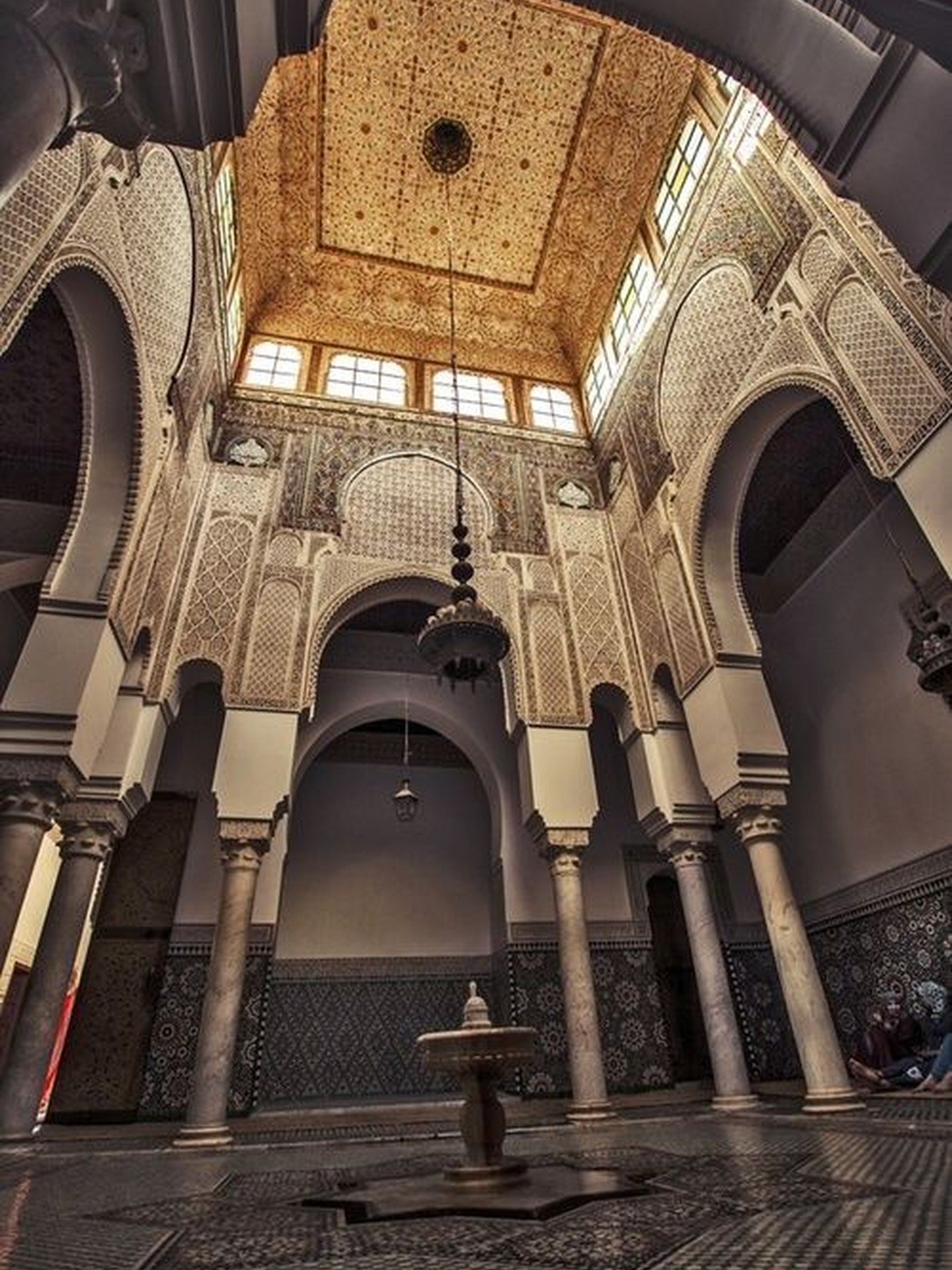
Kasbah Conservation
Listed Building · Rabat

For Architects & Design Studios
From concept sketch to final installation
Traditional craftsmanship rarely arrives in a form an architect can specify, coordinate and sign off. We changed that. RabatArt works inside your process — your drawings, your units, your submittal schedule, your site programme.
Custom specifications
Patterns, modules, dimensions and colourways developed to your design intent — never adapted from a catalogue.
Shop drawings
Dimensioned setting-out, module layouts and junction details issued for your review and stamp.
Material selection
Clay bodies, pigments, cedar grades, lime and metal specified against your site’s light and climate.
Prototype samples
Physical prototypes produced and shipped for approval before a single production batch begins.
International coordination
Freight, customs documentation, site sequencing with your other trades, and installation teams that travel.
Before You Specify
Questions architects ask
The seven things we are asked most often by practices specifying Moroccan craftsmanship for the first time.
Every commission is custom. We hold no stock range. Patterns are developed from your design intent, issued as dimensioned shop drawings for your approval, and prototyped physically before production begins. Historic patterns can be reproduced exactly; new geometry can be developed with our Maâlems from a concept sketch.
Yes. RabatArt has delivered commissions across Morocco, the Gulf, Europe and North America. We handle crating, insurance, freight and full customs documentation, and our installation teams travel to site. International coordination is a standing part of our process, not an exception to it.
This is our restoration practice. We work from the original craft logic — the same clay body, the same natural pigments, the same hand sequence — rather than approximating a historic finish with modern substitutes. Where the original technique has been lost locally, our Maâlems reconstruct it from surviving work.
Both, though we strongly recommend installation by our own teams. Zellige, tadelakt and carved gypsum are installed as part of their making; the setting-out is a craft decision. Where local installation is required, we provide detailed method statements and on-site supervision.
We work in your units, to your submittal schedule, and against your site programme. You receive dimensioned shop drawings for stamp, material dossiers, prototype samples for approval, and a photographic production log at agreed intervals.
Handcrafted production is scheduled, not stocked. Prototype samples typically run three to four weeks from approved drawings; production lead time depends on scope and is fixed in writing at the point of order. We will not quote a date we cannot hold.
By scope: surface area, pattern complexity, material grade and installation requirement. We issue a full itemised proposal following consultation and drawing review — never a rate card, because there is no standard product to rate.
Begin
Tell us about the building. We will tell you what it can become.
Every commission begins the same way — a conversation about the site, the brief, and the standard you intend to hold. There is no obligation and no rate card. Only a considered answer to what your project needs.
Next — The Collective